
The Chicago Suburbs Black Rat Snake: Appearance, biology, life cycle, habitat, diet, behavior
Black rat snake is known to be in the order of Squamata and family of Colubridae as well as genus of Elaphe Obsoleta. They are large Chicago Suburbs snakes with some features that will interest you more than ever.
The diet and habitat
You can find Black rat snake in New England and Florida. You can find them also in almost all parts of Illinois and Nebraska. Those in southern Wisconsin have confirmed spotting this snake in their area. That is what made it a common snake found in the world today. Just as the name connotes, Black Rat Snake, they are known to feed primarily on rodent. The juveniles usually feed on animals such as baby mice, frogs, and even lizard. The adult Black rat snakes mainly feed on chipmunks, mice, rats, rodents, moles, and eggs.
The appearance
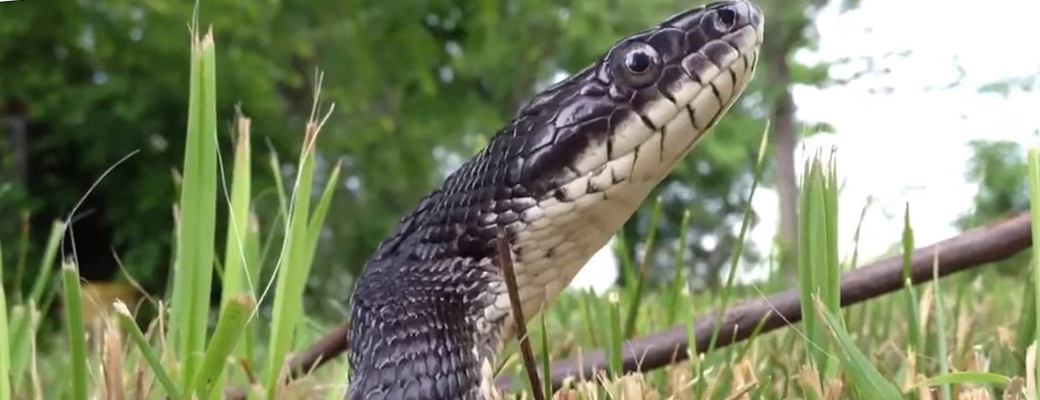
This is a medium size Chicago Suburbs snake measuring from 42 to 72-inch in length. The wideness is known to be 1.5-inch in diameter. There are also powerful keeled scales on the body of this snake with wedge shape head and divided anal plate. It is black as the name connotes but with white chins. Some have black blotches and grey blotches. The older this snake the darker the color will look.
The behavior
Majority of this Illinois snake is known to shy and always try to avoid bumping into human. They usually stay motionless when they meet any danger, but the adult some of the times usually try to defend itself from danger. They usually coil and vibrate the tail in order to cause dry leaves to rattle. This snake will fight back if you continue disturbing it. They have ability to musk, producing foul smell that serve as deterrent to their enemies.
The biology and life cycle
They usually mate within late summer and sometimes early springs. The male usually come around to fertilize the female. After that the female usually laid eggs just like every other snake species. Their life cycle is still confusing as there is no particular confirmed information on that yet. Some believe that it can stay up to 15 to 20 years in captivity.
Visit our Chicago Suburbs wildlife removal home page to learn more about us.
© 2018 Chicago Suburbs Wildlife - Wild Animal Removal Services
